SAIANIRUTH M
AI Scientist
Medical imaging AI scientist building production CXR diagnostic systems, vision-language models, and clinical decision logic. Shipping research-grade work to real radiology workflows.
About Me
Bridging cutting-edge AI research with practical, production-ready solutions

Who I Am
I'm a passionate AI Scientist specializing in intelligent systems that bridge research and real-world applications. My focus is on machine learning, deep learning, and data science solutions that deliver measurable impact.
What I Do
At 5C Network, I've contributed to groundbreaking medical imaging AI research:
- Developed ensemble deep learning systems for automated fracture detection
- Combined rigorous engineering practices with innovative AI methodologies
- Productionized CXR analysis into Windows desktop + Linux web deployments
What Drives Me
I'm driven by AI's potential to transform industries and improve lives. Whether building robust ML pipelines, conducting research, or developing software applications, I deliver impact-driven work that pushes technological boundaries.
Experience
5C Network
Bengaluru, India
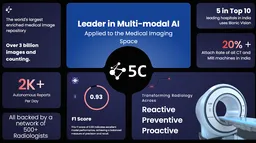
Data Scientist
June 2025 – Present • Full-time
AI Scientist Intern
January 2025 – May 2025 • Internship
Key Achievements & Responsibilities
Developed 24+ production-grade AI models for medical imaging analysis, including pediatric chest X-rays (98.14% accuracy), shoulder fractures (89.42% F1), tuberculosis/silicosis detection, multi-pathology systems for ICU diagnostics, and automated CXR quality-control classifiers
Built end-to-end ML pipelines using PyTorch, TensorFlow, and Hugging Face Transformers, processing 1.6M+ medical images with advanced preprocessing (CLAHE, LANCZOS) and augmentation techniques
Implemented ensemble learning systems combining DenseNet, EfficientNet, ResNet, Vision Transformers (ViT), CLIP, and YOLO architectures for robust clinical decision support across multiple modalities (X-ray, CT, MRI)
Designed scalable data engineering workflows using FastAPI, Docker, and cloud infrastructure (GCP), serving 1000+ real-time predictions per hour with sub-second latency and GPU optimization
Created multimodal AI systems integrating vision-language models (PaliGemma, CheXagent, Gemini) for automated radiology report generation, achieving 81.43% F1 score on findings/impressions tasks
Developed RAG-based retrieval systems using MetaCLIP and FAISS for image similarity search across 1.6M indexed studies, enabling unsupervised pathology exploration and historical report synthesis
Productionized the CXR analysis suite into cross-platform deployments — a Windows desktop installer (Electron + PyInstaller + AES-256 model decryption + admin-aware auto-updater) and a Linux web release (nginx + systemd + Firebase auth + email-domain allowlist) — with modular DB-driven inference, RAM-adaptive model management, persistent SQLite-backed CXR queue, SSE streaming, and rotation-aware tiered CTR clinical decision logic
Built an automated CXR quality-control pipeline combining multiclass quality classifiers with OR-aggregation logic and a Gemini-based structured QC layer (Gemini 2.5 Flash and 3 Flash Preview) using DICOM metadata + PNG renders under strict JSON schemas, with deterministic field-validation and QC-label mapping for downstream parsing reliability
Technologies & Tools
Publication
Peer-reviewed research from production work
A Deep Learning-Based Ensemble System for Automated Shoulder Fracture Detection in Clinical Radiographs
SAIANIRUTH M, et al.
This paper presents a comprehensive deep learning-based ensemble system for automated detection of shoulder fractures in clinical radiographs. The proposed methodology combines multiple state-of-the-art convolutional neural network architectures including ResNet, DenseNet, and Vision Transformers to achieve robust and accurate fracture detection. The system incorporates advanced preprocessing techniques, data augmentation strategies, and interpretability features through Grad-CAM visualization.
Technical Skills
A comprehensive toolkit spanning AI/ML, software engineering, data science, and cloud infrastructure
Programming Languages
AI/ML Frameworks & Libraries
Deep Learning Architectures
Object Detection & Vision
GenAI & LLMs
Data Science & Analytics
MLOps & Cloud
Web Development
Databases & Vector Stores
Projects
A showcase of production AI work and personal projects across medical imaging, vision-language models, and engineering systems.
Featured Work
Pediatric Chest X-ray Analysis
Binary classification system for pediatric chest X-rays trained on ~60K annotated images (20K positive, 40K negative). Two-tower feature fusion of DenseNet-169 (1024-d) and EfficientNet-B2 (1408-d) into a 2432-d concatenated representation, followed by a two-layer classifier head (Linear→ReLU→Dropout(0.3)→Linear→Sigmoid). Preprocessing pipeline applies LANCZOS resizing to 224×224 and CLAHE contrast enhancement. Trained with BCELoss + Adam (lr 1e-3) over 50 epochs on an 80/10/10 split with autobatch sizing, comparing standalone DenseNet/EfficientNet against the fused dual-backbone variant.
Key Achievements
- 98.07% accuracy / 97% precision / 99% recall (DenseNet-169)
- 98.14% accuracy with 99% precision (fused dual-backbone)
- Two-tower feature concatenation (2432-d) with dropout-regularized head
- CLAHE preprocessing for low-contrast pediatric radiographs
- 80/10/10 split with autobatch + early-stopping discipline
Multi-architecture deep-learning framework for automated shoulder fracture localization on AP radiographs, subject of an arXiv publication. Integrates three independently-trained detectors — Faster R-CNN (ResNet-50 FPN baseline for high-quality localization), EfficientDet-D3 (BiFPN + EfficientNet backbone for fast inference), and RF-DETR (pure-transformer head with global attention for maximum recall on subtle cortical disruptions) — and fuses their outputs through an IoU-clustered, confidence-weighted ensemble that anchors final geometry to RF-DETR boxes. Preprocessing covers intensity normalization, histogram equalization, automated shoulder-joint cropping, and resolution standardization. Evaluation includes mAP at multiple IoU thresholds, ROC/PR curves, and dedicated false-negative analysis for hairline, greater-tuberosity, and subtle cortical-contour fractures. Production-ready: ONNX/TensorRT export with ensemble inference at 120–250 ms on A100-class GPUs.
Key Achievements
- Published: arXiv 2507.13408 — Deep Learning Framework for Automated Shoulder Fracture Detection
- Ensemble outperforms every individual detector — sharply reduced false negatives
- RF-DETR: highest recall on subtle cortical disruptions
- Faster R-CNN: superior localization in clear-contrast images
- EfficientDet-D3: fastest runtime with moderate recall
- 120–250 ms ensemble inference on A100 (ONNX/TensorRT)
- COCO-style annotations with hairline / greater-tuberosity FN analysis
CXR Analysis Suite — Desktop + Web Deployments
End-to-end productionized CXR diagnostic system, evolved from a single inference backend into a four-component product (CXR inference, orchestrator, React frontend, packaging) shipped as both a Windows desktop installer and a Linux web deployment. Modular DB-driven inference replaced the original flat-file monolith with four packages (pathologies, malposition, reporting, security), RAM-adaptive model management, hot-reload of thresholds via DB watcher, persistent SQLite-backed CXR queue with stuck-process detection, SSE streaming with a /health state machine, rotation-aware tiered CTR clinical decision logic, AES-256 streaming model decryption, and a per-detection feedback + analytics layer with cloud sync. Windows track ships via Electron + PyInstaller frozen builds, install-time model decryption, ProgramData-anchored logging, network precheck wizard, and an admin-aware auto-updater with tiered mandatory-grace policy. Linux track runs behind nginx + certbot, systemd-supervised services, Firebase auth with email-domain allowlist, and an aggregated health endpoint.
Key Achievements
- Cross-platform deployment (Windows installer + Linux web)
- 40+ pathologies & 16+ supportive devices, rich per-detection output (mask polygons, anatomy overlays, CTR)
- Persistent CXR queue with 300s warn / 600s restart stuck-monitor
- Rotation-aware tiered CTR decision table (clavicle–spinous asymmetry)
- Per-detection feedback + milestone surveys with cloud sync
- Offline MAIRA loading via bundled HF config (no runtime HF Hub calls)
Pediatric Chest X-ray Analysis
Binary classification system for pediatric chest X-rays trained on ~60K annotated images (20K positive, 40K negative). Two-tower feature fusion of DenseNet-169 (1024-d) and EfficientNet-B2 (1408-d) into a 2432-d concatenated representation, followed by a two-layer classifier head (Linear→ReLU→Dropout(0.3)→Linear→Sigmoid). Preprocessing pipeline applies LANCZOS resizing to 224×224 and CLAHE contrast enhancement. Trained with BCELoss + Adam (lr 1e-3) over 50 epochs on an 80/10/10 split with autobatch sizing, comparing standalone DenseNet/EfficientNet against the fused dual-backbone variant.
Key Achievements
- 98.07% accuracy / 97% precision / 99% recall (DenseNet-169)
- 98.14% accuracy with 99% precision (fused dual-backbone)
- Two-tower feature concatenation (2432-d) with dropout-regularized head
- CLAHE preprocessing for low-contrast pediatric radiographs
- 80/10/10 split with autobatch + early-stopping discipline
Shoulder Fracture Detection (YOLO)
Fracture detection system using YOLOv8, YOLOv11, and YOLOv12 architectures. Evaluated both standard detection (DET) and Oriented Bounding Box (OBB) models for rotated fractures.
Key Achievements
- F1 score: 0.833 (YOLOv11-OBB)
- 84.5% recall
- OBB outperforms axis-aligned models
Shoulder Fracture Detection (EfficientDet)
Object detection using EfficientDet family (D0-D7x) with PyTorch Lightning. Compared model variants based on backbone size and dataset balancing strategies.
Key Achievements
- 89.42% F1 score (D7x)
- 90.29% recall
- Dataset balancing improved generalization
Shoulder Fracture Multiclass Detection
Multiclass classification (Clavicle, Humerus, Scapula, Other) using Detectron2 (Faster R-CNN) and RF-DETR Large. Handled class imbalance with hard negative mining.
Key Achievements
- 89.42% F1 (RF-DETR)
- 91.87% F1 (Faster R-CNN)
- 100% precision for Clavicle
Multi-architecture deep-learning framework for automated shoulder fracture localization on AP radiographs, subject of an arXiv publication. Integrates three independently-trained detectors — Faster R-CNN (ResNet-50 FPN baseline for high-quality localization), EfficientDet-D3 (BiFPN + EfficientNet backbone for fast inference), and RF-DETR (pure-transformer head with global attention for maximum recall on subtle cortical disruptions) — and fuses their outputs through an IoU-clustered, confidence-weighted ensemble that anchors final geometry to RF-DETR boxes. Preprocessing covers intensity normalization, histogram equalization, automated shoulder-joint cropping, and resolution standardization. Evaluation includes mAP at multiple IoU thresholds, ROC/PR curves, and dedicated false-negative analysis for hairline, greater-tuberosity, and subtle cortical-contour fractures. Production-ready: ONNX/TensorRT export with ensemble inference at 120–250 ms on A100-class GPUs.
Key Achievements
- Published: arXiv 2507.13408 — Deep Learning Framework for Automated Shoulder Fracture Detection
- Ensemble outperforms every individual detector — sharply reduced false negatives
- RF-DETR: highest recall on subtle cortical disruptions
- Faster R-CNN: superior localization in clear-contrast images
- EfficientDet-D3: fastest runtime with moderate recall
- 120–250 ms ensemble inference on A100 (ONNX/TensorRT)
- COCO-style annotations with hairline / greater-tuberosity FN analysis
General Fracture Detection
Comprehensive evaluation of multiple architectures (SIGLIP, ResNet, DenseNet, EfficientNet) with fusion methods and Decision Rules Engine for general fracture detection.
Key Achievements
- 89.36% accuracy (CheXagent fusion)
- 87.39% accuracy (SIGLIP fusion)
- Dynamic weight adjustment
StopTB & Silicosis Classification
Classification system for Tuberculosis (Active vs. Chronic) and Silicosis. Orchestrated 12+ pathology classifiers with complex logic rules for final diagnosis.
Key Achievements
- 12+ pathology classifiers
- Logic-based diagnosis engine
- Active vs Chronic TB distinction
ICU Pathology Detection
Critical care pathology detection for Pneumothorax, Lung Collapse, and Subcutaneous Emphysema. Compared segmentation (YOLO-Seg) vs detection (RF-DETR) approaches.
Key Achievements
- 98.95% F1 (Subcutaneous Emphysema)
- 98.38% F1 (Lung Collapse)
- 95.73% F1 (Pleural Effusion)
- 2-class instance segmentation with per-class operating-point calibration
Chest X-ray Pathology Detection
Specialized object detection models for Mass, Fibrosis, Rib Fracture, Pneumothorax, and Mediastinal Shift. Dedicated models for high-priority pathologies to maximize sensitivity.
Key Achievements
- 100% precision (Mass)
- 96.42% recall (Mass)
- 97.75% F1 (Rib Fracture)
- 96.09% AUPRC (Pneumothorax)
- 89.43% F1 (Mediastinal Shift)
- 86.26% F1 (Fibrosis)
Large-Scale Federated CXR Models
Large-scale training on 120K chest X-ray images. Normal vs Abnormal classification and segmentation (Pleural Effusion, Consolidation) using diverse backbones.
Key Achievements
- 93.16% accuracy (hybrid model)
- 97.21% F1 (Sternal Sutures)
- 100% precision (Pleural Effusion)
Multi-Label Chest X-ray Classifier (YOLO11-M)
Production-ready multi-label classification system for 40 pathologies using YOLO11-M backbone with FPN. Designed with a configurable system allowing seamless switching between Weighted BCE and Asymmetric Focal Loss via YAML to handle class imbalance. Features two-phase fine-tuning, mixed precision training, and ONNX/TensorRT export.
Key Achievements
- Macro AUROC ~0.82–0.88 (40 pathologies)
- 40 independent binary classifier heads
- Configurable loss strategies (BCE/Focal)
Study-Level Multiple Instance Learning for Chest Radiograph Classification
Built study-level MIL classifiers that aggregate evidence across multiple images of the same radiology study (different views, sides) to support radiologist interpretation. Most MIL in medical imaging operates on patches within one image; this work extends the formulation so the bag is the set of images in a multi-view study and the instance is a full image — directly addressing per-image label noise where study-level labels get stamped onto views that don't show the finding. Planned extension to tiled MIL layers within-image patch-level aggregation on top of the study-level pooling.
Key Achievements
- Study-level bag formulation (bag = set of images in one study, not patches in one image)
- Addresses per-image label noise from study-level labels applied uniformly across views
- Calibration framework supporting cost-asymmetric per-pathology operating points
13-Head Multi-Task Classifier on RAD-DINO-MAIRA-2 with Phased Training
Built a 13-head multi-task chest-radiograph classifier on top of the RAD-DINO-MAIRA-2 vision encoder (DINOv2 ViT-B/14 at native 518×518 input) — twelve pathology heads plus an explicit Normal head trained as a peer rather than as the absence of positive predictions. Two-phase training schedule: frozen-encoder warmup with batch size 512 to settle the head weights, then end-to-end fine-tuning of encoder + heads. Established that under a clean label set, recipe-level interventions (warmup, learning-rate schedules, multi-head structure) converge to the same ceiling — making data/label signal quality the dominant lever rather than architectural choice.
Key Achievements
- 13-head architecture: 12 pathology + 1 explicit Normal as a peer head
- Phased training — frozen-encoder warmup → end-to-end fine-tune
- Established that architecture is not the limiting factor for this task; label-signal quality is the dominant lever
Automated CXR Quality-Control Pipeline
Quality-gate pipeline for detecting suboptimal chest X-rays before they enter the diagnostic queue. Combines a fleet of multiclass quality classifiers with OR-aggregation logic for higher failure sensitivity, plus a Gemini-based structured QC layer that consumes DICOM metadata and PNG renders to extract exposure, artifacts, cropping, rotation, flipping, mobile-capture, age-group, and overall-quality verdicts under strict JSON schemas. Includes deterministic field-validation and QC-label mapping for downstream parsing reliability.
Key Achievements
- OR-aggregation across multiclass + per-class models
- Strict JSON-constrained QC validation (8 fields)
- Benchmarked Gemini 2.5 Flash vs 3 Flash Preview
- Reliable metadata extraction (modality, body part, side, study ID, age, sex)
- Surfaced operational gaps in exposure / cropping / latency for deployment
Google CXR Foundation Analysis
Performance analysis of Google's CXR Foundation model (pre-trained ViT) for medical imaging embeddings. Evaluated transfer learning capabilities and bottlenecks.
Key Achievements
- Identified latency issues (135s/image)
- 0.85 images/min throughput
- Strong diagnostic capabilities
CheXagent Evaluation
Technical evaluation of Stanford AIMI's CheXagent-8b for zero-shot binary disease classification (pneumothorax, pleural effusion). Multimodal vision-language model assessment.
Key Achievements
- 70-75% precision/recall (zero-shot)
- Baseline performance established
- Fine-tuning recommended
Radiology Report Generation
Fine-tuned multimodal LLMs (PaliGemma 3B, Gemma 4B) for automated radiology report generation from chest X-rays. JSONL datasets with image-text pairs. Architecture selection informed by extensive Vision Encoder experiments evaluating XrayGPT and BioMedLM for efficiency.
Key Achievements
- 81.43% F1 score (PaliGemma)
- 74% accuracy
- Findings & Impressions generation
PaliGemma Shoulder Fracture Detection
Fine-tuned PaliGemma (3B, 10B, 28B) for shoulder fracture detection and bounding box localization. QLoRA for efficient training with custom attention heads.
Key Achievements
- 78.36% accuracy (10B)
- 79.14% F1 (bounding box)
- Two-stage inference pipeline
MedCLIP Contrastive Learning
Contrastive learning framework based on CLIP to align medical images with diagnostic text. Trained on 420K samples across 69 labels for multi-label classification.
Key Achievements
- 98-100% accuracy (distinct classes)
- Multi-label classification
- Zero-shot capability
Knee X-ray Analysis System
Comprehensive knee X-ray analysis system generating structured medical reports. Modular pipeline with bone detection, view classification, and pathology detection.
Key Achievements
- Osteoarthritis grading (0-4)
- Post-operative implant detection
- AP vs Lateral orientation
CXR Analysis Suite — Desktop + Web Deployments
End-to-end productionized CXR diagnostic system, evolved from a single inference backend into a four-component product (CXR inference, orchestrator, React frontend, packaging) shipped as both a Windows desktop installer and a Linux web deployment. Modular DB-driven inference replaced the original flat-file monolith with four packages (pathologies, malposition, reporting, security), RAM-adaptive model management, hot-reload of thresholds via DB watcher, persistent SQLite-backed CXR queue with stuck-process detection, SSE streaming with a /health state machine, rotation-aware tiered CTR clinical decision logic, AES-256 streaming model decryption, and a per-detection feedback + analytics layer with cloud sync. Windows track ships via Electron + PyInstaller frozen builds, install-time model decryption, ProgramData-anchored logging, network precheck wizard, and an admin-aware auto-updater with tiered mandatory-grace policy. Linux track runs behind nginx + certbot, systemd-supervised services, Firebase auth with email-domain allowlist, and an aggregated health endpoint.
Key Achievements
- Cross-platform deployment (Windows installer + Linux web)
- 40+ pathologies & 16+ supportive devices, rich per-detection output (mask polygons, anatomy overlays, CTR)
- Persistent CXR queue with 300s warn / 600s restart stuck-monitor
- Rotation-aware tiered CTR decision table (clavicle–spinous asymmetry)
- Per-detection feedback + milestone surveys with cloud sync
- Offline MAIRA loading via bundled HF config (no runtime HF Hub calls)
RAG-style system using MetaCLIP for retrieving relevant historical X-ray reports. FAISS-indexed 1.6M images with Gemini 2.5 Flash for report synthesis.
Key Achievements
- 1.6M images indexed
- 1024-dim embeddings
- Top-100 retrieval with synthesis
ICU Suite – CXR Critical Care Module
Comprehensive ICU-focused chest X-ray analysis system detecting critical pathologies and device malpositions. Includes live inference backend with FastAPI and interactive 3D web showcase for conference demonstration.
Key Achievements
- Multi-pathology detection (ICU conditions)
- Medical device malposition checks
- Structured JSON + clinical reports
CXR Suite
Comprehensive AI solution for Chest X-Ray analysis including pathology detection, device detection, malposition analysis, and cardiothoracic ratio.
Key Achievements
- 30+ pathologies detected
- 16+ support devices recognized
- Flexible deployment (API/App/Cloud)
Pathologies — single-service APIs
Standalone FastAPI services for chest X-ray findings. Independent deployable apps for various pathologies with standardized API contracts.
Key Achievements
- 20+ standalone pathology services
- Standardized API contracts
- Modal deployment support
Device CXR API
Production-grade API analyzing chest X-rays for supportive devices and malposition analysis with real-time SSE streaming.
Key Achievements
- Per-device malposition status
- Real-time SSE streaming
- Single overlay image rendering
A full deep-learning pipeline for detecting scoliosis from spinal X-ray images. Multiple CNN architectures implemented (ResNet/DenseNet/ViT variants). Includes Grad-CAM for interpretability at block/feature-map level. Preprocessing: resizing, noise removal, intensity normalization. Pediatric vs Non-Pediatric classification capability. Evaluated using accuracy, recall, precision, confusion matrix. Designed to scale to 250K medical CXR images.
Generates large-scale synthetic ID card images for Computer Vision model training. Template-based ID generation. Randomized text, dates, names, photos for maximum variety. Supports exporting datasets for OCR/fraud detection. Modular design for adding new templates quickly.
A clustering solution to categorize customers using behavioral attributes. Uses Annual Income + Spending Score. Elbow Method used for optimal cluster count. Visualizations for cluster boundaries. Helps identify high-value vs low-value customer groups.
Predicts stock closing prices using an LSTM neural network. Normalization using MinMaxScaler. Time-window sequence generation. Multi-layer LSTM with dropout. Visualized predicted vs real closing prices.
A regression machine learning project focused on price prediction using the CarPrice_Assignment.csv dataset. Predicts car prices using features such as engine size, horsepower, curb weight, and fuel type. Builds multiple models: Linear Regression, Decision Trees, Random Forest. Includes EDA, correlation analysis, and outlier treatment. Measures performance using MAE, RMSE, R².
Data engineering and visualization across five years of global happiness data. Unified 2015–2019 datasets. Standardized inconsistent features (e.g., 'Economy (GDP per Capita)' → 'GDP per capita'). Visualizes GDP, Trust, Social Support vs Happiness Score. Heatmaps reveal strongest global indicators.
Analysis of a multi-period sales dataset using classical time-series techniques. Decomposition into trend, seasonality. Tested ARIMA/SARIMA models. Rolling means + stationarity tests (ADF).
Interactive business analytics dashboard. Sales performance metrics. Customer segmentation. Product profitability and trends.
Secure Password Manager
A secure local credential management tool. AES encryption. Local encrypted vault storage. GUI + CLI interfaces. Auto password generator. Integrity check + safe read/write.
HireAI - LLM-Powered ATS
End-to-end AI-driven ATS with multi-stage recruitment screening. Gemini-based resume scoring with dynamic MCQ generation tailored to candidate profiles.
Key Achievements
- 70% reduction in shortlisting time
- Dynamic MCQ generation
- Multi-threshold evaluation
E-Commerce Scraper + GPT Insights
A full pipeline for scraping Amazon/Flipkart/Myntra. Handles lazy loading, pagination. Rotating proxies to avoid blocks. CAPTCHA bypass support. Exports structured JSON. GPT-powered product comparison, shortlisting, summaries.
CLI application to manage student records. Linked list backend. File persistence. Password-protected admin interface. Console colors + formatting.
Banking simulation with role-based access. Admin + User logins. Binary file account storage. Fund transfers, balance inquiry. OOP modeling (classes, inheritance).
Early Electrical Engineering projects (Sound Activated System & Street Light Automation) representing my initial background before transitioning to AI.
saianiruth.me — Portfolio + Writing System
The site you're on right now. Vite + React SSR with prerender, a three-section MDX content surface (blog / research / notes), and a custom build pipeline that emits per-post Article JSON-LD, OG, Twitter Card, canonical, sitemap, and RSS for every post automatically.
Key Achievements
- Date-gated scheduled publishing — posts go live on their frontmatter date via daily GitHub Actions cron
- Per-post SEO baked into the prerendered HTML (crawlers + share previews see fully-rendered content, no JS required)
- Auto-generated sitemap.xml + rss.xml + IndexNow submission on every build
Education
Government College of Technology Coimbatore
Coimbatore, India
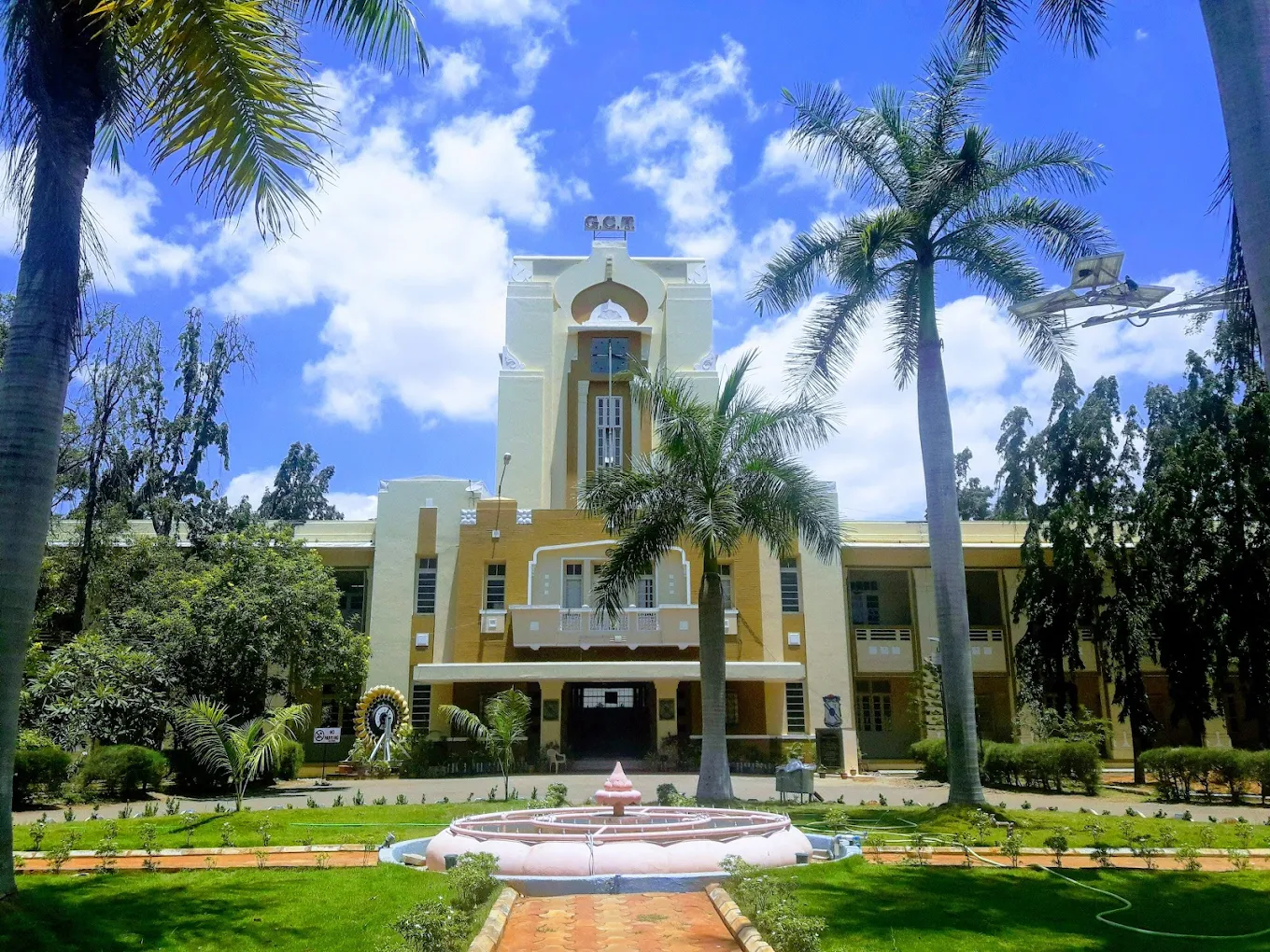
Bachelor of Engineering in Electrical and Electronics Engineering
Oct 2021 – Apr 2025
Leadership & Activities
Training & Placement Coordinator
December 2022 – April 2025
Led training and placement activities, coordinating between students and industry partners. Organized skill development workshops, career guidance sessions, and facilitated recruitment processes to enhance student employability and industry readiness.
Data Science & ML Fellow
HyperVerge Academy • August 2023 – December 2024
Selected for an intensive fellowship program focusing on advanced data science and machine learning techniques. Completed specialized training in computer vision, deep learning frameworks, and industry-standard ML practices while working on real-world projects.
Get In Touch
Let's discuss opportunities in AI, machine learning, or software engineering. I'm always open to collaborating on innovative projects.
sai2804aniruth@gmail.com
Location
Bangalore, India
Send a Message
Fill out the form below and I'll respond as soon as possible.